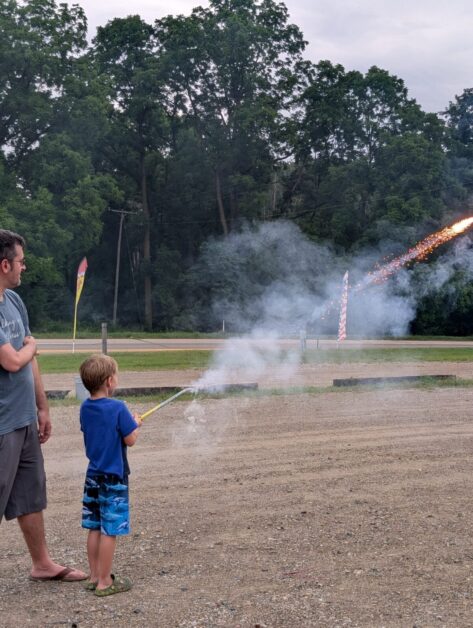
Why We Chose to Homeschool — Our Wonderfully Empowered Journey
I didn’t grow up thinking I’d homeschool any children I had.
I went to public school. I liked public school. I had good teachers, made real friends, and came out the other side mostly intact. Homeschooling was something I associated with strangeness(like many other homeschool-uneducated people). It was never something I pictured for my own family.
And then, in 2022, when my son was just two years old, everything changed my view on it. Ultimately, its why we chose to homeschool.
The Moment We Started Asking Questions
It was an extremely shocking moment, despite it being something I was [unfortunately] used to hearing about by then. It wasn’t a sweeping and grand revelation where I said “That’s it! Our child will never go to public school!” It started as a small, persistent feeling that it wasn’t right, or rather, wouldn’t be right with sending our child to school.
In 2022, there was a school shooting at a local middle school. We had recently moved to Upstate SC from Chicago, a place I’d grown up in and seen violence first-hand, nearly daily. I thought this new home was a safe space from atrocity such as that. Looking at my son, only two years old at the time and thinking the horror those parents must be going through — that’s what planted the homeschool seed.
I didn’t say ‘I’m going to homeschool’ right away. I said ‘I’m going to learn more about our options.’
There’s a difference, and I think that distinction matters — because the learning phase is where most of the real decisions happened.
The Research Phase
I did what every parent does when they start questioning something: I Googled everything. I read all the books.
I read the research on homeschool outcomes. I read about socialization (the thing I was most worried about). I found the SC homeschool laws and read those too. I found forums and Facebook groups full of families who had been doing this for years, and I lurked for weeks before I said a single word.
What I kept coming back to was this: the evidence for homeschooling as a valid, effective educational approach is solid. The concerns I had — socialization especially — had real, documented answers. The legal framework in SC was clearer than I expected.
What I didn’t find was a good reason not to try and now that we are actively doing it, I can’t imagine life any other way.
Must Read Books on Homeschooling and More!
- Teach Your Own: John Holt
- How Children Learn: John Holt
- The Homeschooling Handbook: Mary Griffith
- Anyone Can Homeschool: Nicki Truesdell
- Becoming Homeschoolers: Monica Swanson
- Homeschooling: You’re Doing It Right Just by Doing It: Ginny Yurich
- The Brave Learner: Julie Bogart
- Dumbing Us Down: John Taylor Gatto
- The Book You Wish Your Parents Had Read: Philippa Perry
- Hold On to Your Kids: Gordon Neufeld and Gabor Maté
- Raising Good Humans: Hunter Clarke-Fields
- Raising Mentally Strong Kids: Daniel Amen and Charles Fay
- Raising Securely Attached Kids: Eli Harwood
- The Parenting Map: Shefali Tsabary
- The Awakened Family: Shefali Tsabary
- Outside Kids in an Inside World: Steven Rinella
- 1000 Hours Outside (Curriculum and Philosophy): Ginny Yurich
- Last Child in the Woods: Richard Louv
- Balanced and Barefoot: Angela J. Hanscom
What We Were Really Worried About
I want to be clear about the fears, because I think they’re the same fears every family has, and I don’t want to skip over them like they were easy.
Socialization.
This was the big one. I was genuinely worried my child would be isolated, weird, and unable to navigate the social world. I had the image of the sheltered homeschool kid who couldn’t talk to strangers without visibly panicking.
What I’ve learned: the socialization concern is valid but it’s solvable. Homeschooled children who are part of active co-ops, sports programs, and community groups have social lives that rival or exceed their traditionally schooled peers. The research backs this up.
Whether We Were Qualified.
I am not a trained teacher. I don’t have a degree in education. I had a moment — okay, several months — of genuine doubt about whether we were smart enough, organized enough, and patient enough to do this.
What I’ve learned: you don’t need to be a trained teacher. You need to know your child, be willing to learn alongside them, and be consistent. The research on homeschool outcomes doesn’t correlate strongly with parent education level — it correlates with parent intentionality.
Missing out.
Would my child miss the school play? The sports teams? The homecoming dance? The friendships that form in the hallway between classes?
What I’ve learned: Some of those things are replaceable with better versions. Some are genuinely different in homeschooling. And some — the hallway dynamics, the peer pressure, the bullying, the social hierarchy of a large school — I’ve stopped mourning.
The Decision
We decided to try it. Not ‘we’re homeschooling forever.’ Just: we’re going to try this, honestly, and evaluate. A “preschool” year trial year where we tested the waters in a capacity that was unofficial.
I think the trial frame was important. It gave me permission to not be certain. It gave us an off-ramp if we needed it. It lowered the stakes enough that we could actually begin.
Our First Year
The first year was not what I expected. And I want to be specific about that, because every post I’d read made homeschooling sound like either a paradise or a disaster, and ours was neither.
What was hard:
- Balancing roles between my husband and I
- The isolation was real in a way I hadn’t fully anticipated. I’d planned for my child’s social life. I hadn’t planned enough for my own.
- Constant togetherness and burnout, no breaks
- Social pressure from family that we were failing out child
- Learning that homeschooling is NOT traditional school at home; it isn’t 6 hours of bookwork.
What surprised me in the best ways:
- We had already done so much of the groundwork with instilling a love of reading in our child from birth up, so teaching him to read came easier than weaning him from his pacifier and bottle, even easier than potty training!
- The time. I didn’t anticipate how much time we’d have — for each other, for depth, for the things that matter.
- Not getting as sick as often as traditionally schooled kids
- Spending SO much time outside
- Really knowing what our child is learning, who he’s learning it from, and how
- Knowing my son was safe, every single day — because he is always with my husband or I.
What We Know Now That We Wish We’d Known Then
If I could go back and sit with myself in those first weeks, here’s what I’d say:
- Find your people first. The curriculum can wait. The community cannot. I spent too much time planning lessons and not enough time finding other homeschool families. Community would have made the first year half as hard. We spent so much of his early childhood years making friends with kids who were moving into public school and now, the relationships are non-existent due to clashing schedules.
- The first month is not representative. Everything feels chaotic and uncertain and like you’re doing it wrong. You’re not. You’re calibrating. Give it a season before you evaluate.
- Your child knows how to learn. You don’t need to teach them — you need to create conditions where learning can happen. Trust them more than you think you should.
- You will have bad days. The bad days are not a sign that you made the wrong choice. They’re just days. Every parent — homeschool or otherwise — has them.
- The freedom is the point. Not just freedom from a school schedule, but freedom to follow what matters, at the pace it takes, in the way it fits your actual child. That freedom is worth protecting even when it’s hard.
💬 What I Say When People Ask Why We Chose to Homeschool
Why wouldn’t you? It’s really that simple. I understand the fears. I understand the hesitancy. What I don’t understand is having the means and ability and choosing not to. What’s the point of becoming a parent if you allow others to raise your child(ren)? Self-educating yourself about the origins of our school systems and still choosing to send your child there, it’s wrong. I know not everyone can make the choice to, but really, they can. They honestly can.
Why We’d Make the Same Choice Again
I don’t write this to convince you to homeschool. If public school is working for your family, that’s wonderful. I believe in parents making thoughtful choices for their specific children, and I know homeschooling is not the right choice for everyone.
But for us — for our specific child, in our specific season of life, with our specific values — it has been one of the best decisions we’ve made. I do believe more people should consider it.
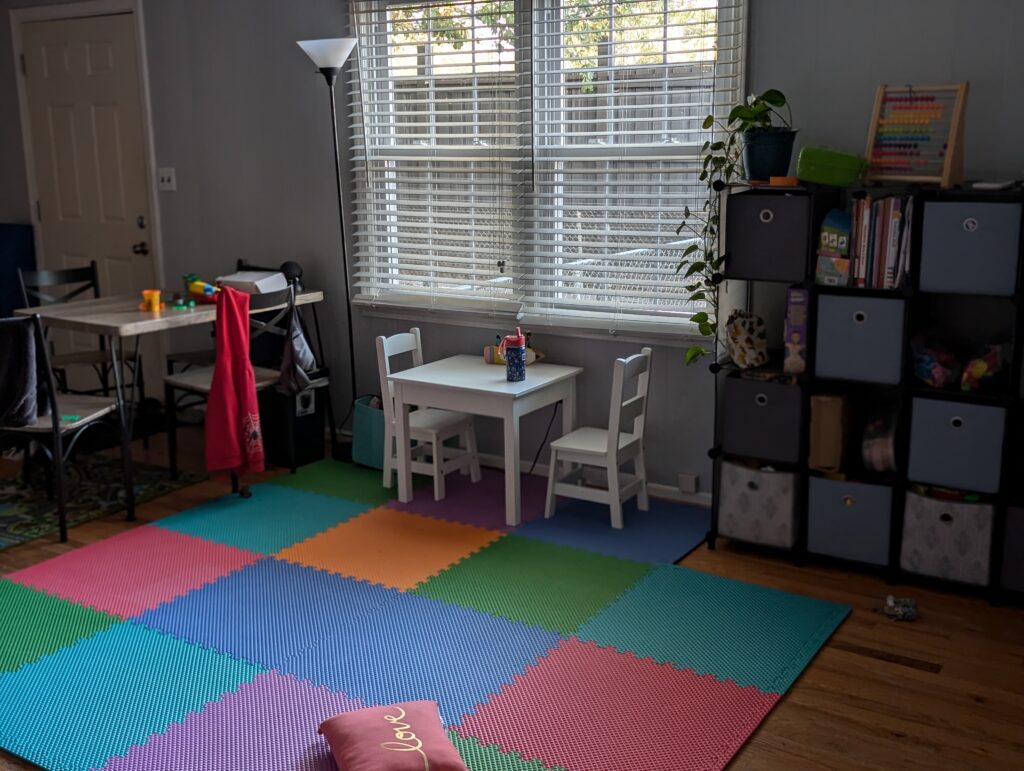
Not because every day is beautiful. Not because we have the perfect curriculum or the most organized learning space or the most impressive portfolio. But because we get to know our child in a way that a six-hour school day and a homework-filled evening never quite allowed. Because we have time — for the questions, for the projects, for the detours, for each other.
We have time with our child that we’d truly miss out on if he were gone for half his waking hours.
🌿 If You’re Sitting on the Fence
If you’re reading this because you’re considering homeschooling and you’re not sure,
here’s what I’d tell you:
You don’t have to be certain to begin. You just have to be willing.
Start with our free Starter Kit — it covers SC’s legal options, a first-week planner,
and a list of Upstate community resources. You can learn everything you need to know
before you commit to anything.
And if you have questions — about the law, about curriculum, about community —
that’s what this site is for.
Leave Isolation Behind. Community Starts Here.
🎁 FREE DOWNLOAD: New Homeschooler’s Starter Kit
Grab our free 8-page guide — includes a curated list of Upstate SC community resources, a first-week planner, and more.
[fluentform id=”5″]
📬 FIELD NOTES — Our Weekly Newsletter
New co-op openings. Free events. Real homeschool talk. Every Thursday at 9am. Free, always.
Sign-up here!
RELATED POSTS

👩💻 AUTHOR BIO
Crystal | Founder, The Homeschool Habitat
Crystal is a homeschooling mom in Upstate South Carolina and founder of The Homeschool Habitat.
She built this site because she remembers exactly how confusing those first Google searches felt — and wanted to create the clear resource she wished she’d had.
Follow @TheHomeschoolHabitat on Pinterest and Facebook.