Eclectic Homeschooling: The Comprehensive Guide (19+ Curriculum Options, picks for Every Subject)
Ask an experienced homeschool parent what method they use, and the most honest answer is usually some version of ‘it depends.’
It depends on the child. It depends on the subject. It depends on the season of life and the age of the kids and what was working last year that mysteriously stopped working this year. It depends, honestly, on what they’ve tried and what they’ve abandoned, on what they’ve discovered in a Facebook group or a library book or a conversation with another homeschool parent at a park day.
This is eclectic homeschooling. Not an ideology, not a brand, not a philosophy handed down from a 19th-century educator. A practice. The ongoing, honest, responsive practice of giving each child the education they actually need, using whatever combination of approaches and resources does that most effectively.
Eclectic homeschooling is how most experienced homeschool families actually operate. And it can be magnificent — but only when it’s done with intention rather than anxiety, with curation rather than accumulation, and with clarity about why you’re choosing what you’re choosing. This guide provides the framework, the best picks for every subject, and the wisdom to build a truly personalized education for your specific child.
What Is Eclectic Homeschooling?
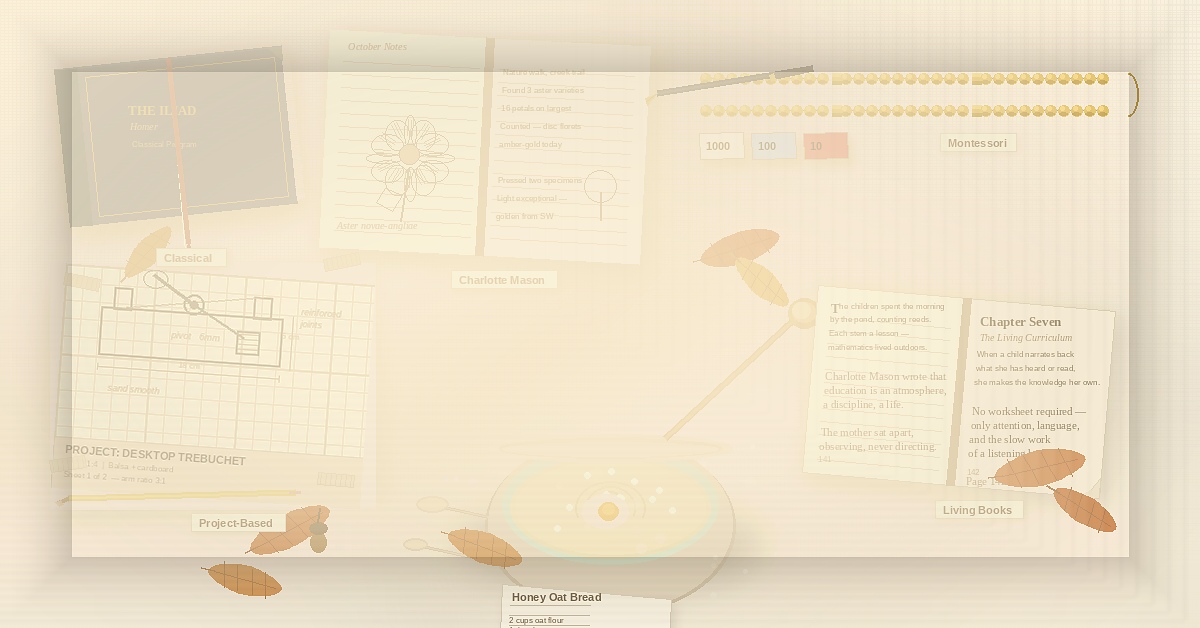
Eclectic homeschooling is the practice of drawing from multiple educational methods, philosophies, and curriculum products to build a personalized education for each child. An eclectic family might use a rigorous sequential math program (classical influence), read-alouds from living books (Charlotte Mason influence), Montessori materials for the youngest child, a project-based science approach, and a structured grammar curriculum — all in the same week, all in service of the same child (or children).
The defining characteristic of eclectic homeschooling is not what is chosen but how and why it is chosen: based on observation of the individual child, honest evaluation of what is working, and willingness to change course when it isn’t. Eclectic homeschooling families are method-literate — they understand enough of each approach to borrow from it intelligently — and outcome-focused: the only question that matters is ‘is my child actually learning?’
The Eclectic Homeschooling Framework: How to Make Principled Choices
The risk of eclectic homeschooling is not too little structure — it’s too many choices. The parent who buys a new curriculum every time the current one feels hard is not practicing eclectic homeschooling; they’re practicing anxiety. True eclectic homeschooling requires a framework for making decisions.
1. Know Your Anchor Method
Most eclectic homeschooling families have a philosophical home — a method that resonates most deeply and provides the organizing framework even when they borrow from others. Charlotte Mason families who use Saxon math are CM-eclectic. Classical families who follow their child’s interests in the afternoon are classical-eclectic. Know your anchor and borrow intentionally from others rather than mixing randomly.
2. Evaluate by Subject, Not by System
Different subjects call for different approaches. Mathematics is almost universally better with explicit, sequential instruction — regardless of your overall philosophy. Nature study is almost universally richer with a Charlotte Mason approach. Writing develops best with deliberate, structured practice — regardless of method. Let the nature of each subject guide your choice for that subject.
3. Know Your Child’s Learning Style for Each Subject
The same child may be a hands-on kinesthetic learner in math and a passionate reader in history. The curriculum that works for one subject may not work for another because the child’s learning style varies by subject area. Observe your child in each subject separately before choosing curriculum for it.
4. Commit Before You Evaluate
The most common eclectic homeschooling failure is buying a curriculum, finding the first three weeks hard, and switching. Most curriculum resistance at 3-6 weeks is adjustment, not incompatibility. Commit to any curriculum for 12 weeks before evaluating whether it’s the wrong fit. Then evaluate honestly: Is my child learning? Can I sustain implementation? Is the content appropriate?
5. Use Free Before Paid
Try Khan Academy before buying a math program. Read Ambleside Online before buying a Charlotte Mason curriculum. Use Core Knowledge sequence guides before buying a history spine. Free resources teach you what your child needs before you spend money on it. Many excellent eclectic families run primarily on free resources with one or two targeted paid programs.
Best Curriculum Picks by Subject
Mathematics
Math is the one subject where sequence matters most and where explicit, systematic instruction is almost universally necessary. This is not a subject to unschool without supplementation.
free
Khan Academy
✅ Covers all 5 SC required subjects | 💰 FREE (completely)
The best free math resource in existence. Genuinely excellent K-12 math sequence. Mastery-based — students advance when ready. Use as primary or supplement. Every eclectic homeschooling family should use Khan Academy for math at minimum.
🔗 Visit khanacademy.org
🟢 SECULAR PICK
Math-U-See
⚠️ Supplement needed for all subjects | 💰 $50–$150/level
Manipulative-based, sequential, designed for parent-instructors who aren’t math experts. The teacher DVD teaches the parent before the parent teaches the child. One of the most parent-friendly math programs available. Secular. Pairs with any other curriculum.
🔗 Visit mathusee.com
🟢 SECULAR PICK
Singapore Math
⚠️ Supplement needed for all subjects | 💰 $20–$50/level
Bar model approach develops strong mathematical reasoning rather than rote procedure. Some of the strongest mathematical thinkers come from Singapore Math families. More parent-intensive than Math-U-See but produces exceptional mathematical understanding.
🔗 Visit singaporemath.com
🟢 SECULAR PICK
Saxon Math
⚠️ Supplement needed for all subjects | 💰 $50–$120/level
The most structured, repetitive math program available. Excellent for children who need daily review and consistent practice. Used heavily in classical programs. The most predictable and measurable math program — every lesson follows the same structure.
🔗 Visit multiple retailers
Reading and Phonics
Explicit phonics instruction is non-negotiable for children who are learning to read. No other approach consistently produces fluent readers across all learning styles. After fluency is established, reading expands naturally through living books.
🟢 SECULAR PICK
Logic of English: Foundations
⚠️ Supplement needed for all subjects | 💰 $150–$175
A comprehensive phonics, reading, and spelling program that teaches the logic behind English spelling rules. More systematic than All About Reading — teaches why English works the way it does rather than just the patterns. Strong for analytical learners.
🔗 Visit logicofenglish.com
🟢 SECULAR PICK
All About Reading
⚠️ Supplement needed for all subjects | 💰 $40–$80/level
The most widely recommended reading program in the eclectic homeschooling community. Orton-Gillingham based. Multi-sensory. Works for every learner, including those with dyslexia. Designed for parents without teaching experience. The closest thing to a universal recommendation in homeschool literacy.
🔗 Visit allaboutlearningpress.com
🟤 Faith-Based
The Good and the Beautiful Language Arts
⚠️ Supplement needed for all subjects | 💰 Free (PDF) to $80/year
The most popular faith-based early literacy program. Gentle, beautiful, and effective. Free PDF versions available for every level — zero-risk to try. Strong in phonics, reading, and early language arts.
🔗 Visit goodandbeautiful.com
Writing and Composition
Writing is a skill that requires deliberate instruction, consistent practice, and patient revision. It rarely develops adequately without some structured support — regardless of how much a child reads.
🟢 SECULAR PICK
Brave Writer
⚠️ Supplement needed for all subjects | 💰 $10–$200+/year (modular)
Literature-based, process-oriented writing program that makes writing feel connected to reading rather than separate from it. The Arrow and Boomerang guides teach writing through the books your child is already reading. Best for families who want writing to feel meaningful rather than mechanical.
🔗 Visit bravewriter.com
Secular & Faith-Based Pick
Writing & Rhetoric (Classical Academic Press)
⚠️ Supplement needed for all subjects | 💰 $20–$30/level
Classical approach to writing through imitation and progymnasmata — the ancient exercises used to train orators. Develops both technical writing skill and rhetorical sensibility. Best for classical and classical-eclectic homeschooling families.
🔗 Visit classicalacademicpress.com
Secular & Faith-Based Pick
Institute for Excellence in Writing (IEW)
⚠️ Supplement needed for all subjects | 💰 $40–$300+
The most widely used writing program in the homeschool world, and for good reason — it works. The structural keyword outline approach eliminates the ‘I don’t know what to write’ paralysis. Systematic and proven. Light faith integration.
🔗 Visit iew.com
History and Social Studies
History is most richly learned through narrative — living books, primary sources, and story — rather than through textbook summaries. The best history programs tell the story; the textbooks summarize it.
🟢 SECULAR PICK
Story of the World (Vol. 1–4)
⚠️ Supplement needed for all subjects | 💰 $15–$40/volume
The gold-standard secular narrative history spine for K-8. Written as engaging, readable narrative by Susan Wise Bauer. Covers ancient through modern history in four volumes. Pairs with library books. The most-used secular history program in eclectic homeschooling.
🔗 Visit peacehillpress.com
🟤 Faith-Based
Mystery of History (Vol. 1–4)
⚠️ Supplement needed for all subjects | 💰 $65–$85/volume
The faith-integrated equivalent of Story of the World. Covers world history through a biblical lens. Equally narrative, equally accessible. The most-used faith-based history spine in eclectic homeschooling.
🔗 Visit themysteryofhistory.com
🟤 Faith-Based
Beautiful Feet Books — History Through Literature
⚠️ Supplement needed for all subjects | 💰 $45–$130/guide
Guides that teach history exclusively through primary and living books — no textbook at all. Multiple historical periods available (Ancient History, American History, History of Science, etc.). One of the most Charlotte Mason-aligned history approaches available.
🔗 Visit bfbooks.com
Science
Science in the early years is best learned through observation, experimentation, and narrative — not textbook summaries. Formal textbook science becomes more appropriate as children enter the Logic Stage (ages 10+).
🟢 SECULAR PICK
Elemental Science
⚠️ Supplement needed for all subjects | 💰 $30–$80/level
Well-organized secular science with strong lab components. Covers biology, earth science, chemistry, and physics at appropriate levels. One of the cleanest secular science spines for eclectic homeschooling families.
🔗 Visit elemental-science.com
🟢 SECULAR PICK
Real Science Odyssey (Pandia Press)
⚠️ Supplement needed for all subjects | 💰 $40–$80/level
Secular, lab-heavy science curriculum covering biology, chemistry, physics, and earth science at multiple levels. Strong in the actual doing of science rather than just reading about it. Popular in secular eclectic homeschooling families.
🔗 Visit pandiapress.com
🟤 Faith-Based
Apologia Young Explorer Series
⚠️ Supplement needed for all subjects | 💰 $30–$80/level
The most popular faith-based elementary science program. Year-long investigation of major science topics with extensive experiments, nature journals, and hands-on activities. Explicit Christian worldview throughout.
🔗 Visit apologia.com
Foreign Language
🟢 SECULAR PICK
Duolingo
⚠️ Supplement needed for all subjects | 💰 FREE (basic) / $6.99/month (Duolingo Plus)
Gamified language learning app covering 40+ languages. Not a complete language program but an excellent daily practice tool. Free. Used by millions. Best as a supplement rather than a primary program.
🔗 Visit duolingo.com
🟢 SECULAR PICK
Latin for Children (Classical Academic Press)
⚠️ Supplement needed for all subjects | 💰 $50–$100/level
The most accessible Latin program for younger students (ages 8+). DVD instruction, engaging chants, and clear pedagogy. Used widely in classical and classical-eclectic homeschooling families. Secular-friendly.
🔗 Visit classicalacademicpress.com
🟢 SECULAR PICK
Rosetta Stone
⚠️ Supplement needed for all subjects | 💰 $36–$180/year
Immersive, visual, intuitive language learning software for 20+ languages. Good for families who want a structured, complete language program without significant parent teaching. Works well as a self-directed program for older students.
🔗 Visit rosettastone.com
Sample Eclectic Homeschooling Curriculum Combinations
🟢 Sample Secular Eclectic (K-5)
Math: Khan Academy (free) + Math-U-See manipulatives for new concepts
Reading: All About Reading (until fluent) → independent reading + library books
Writing: Brave Writer Arrow and Boomerang guides
History: Story of the World with library book supplements
Science: Elemental Science + nature study journal (CM-inspired)
Grammar: First Language Lessons (secular) for ages 6-10
Arts: Yellow Bobbypins or local art class; YouTube music appreciation
Annual cost: ~$0–$400 (most is one-time or library-sourced)
🟤 Sample Faith-Based Eclectic (K-5)
Math: The Good and the Beautiful Math OR Math-U-See
Reading/LA: The Good and the Beautiful Language Arts (free PDF levels)
Writing: IEW (grades 3+) | TGATB writing (K-2)
History: Mystery of History Vol. 1 + library books
Science: Apologia Young Explorer (Botany, Zoology, etc.)
Bible: Family devotional + TGATB Bible reader
Arts: Local faith-based co-op enrichment
Annual cost: ~$0–$300 depending on PDF vs. print choices
✨ Sample Zero-Cost Eclectic (All Ages)
Math: Khan Academy (free, K-12)
Reading: All About Reading samples + library phonics books; independent reading from library
Writing: Brave Writer’s free blog resources + library books as mentor texts
History: Story of the World (library) + Story of the World Activity Book (library)
Science: Real-life observation + library science books + YouTube SciShow Kids
Language Arts: Simply Charlotte Mason free copywork resources
Arts: YouTube art instruction + local library maker programs
Annual cost: $0 with a library card. This is a complete education.
What an Eclectic Homeschooling Day and Week Look Like
8:00–8:30am
Math
Daily, sequential, non-negotiable. Khan Academy, Math-U-See, or Saxon — whichever program you’ve chosen. Math is the one subject where consistency beats everything else.
8:30–9:00am
Language Arts / Phonics
Reading instruction, phonics work, or independent reading depending on age. For early readers: All About Reading 20 min. For fluent readers: free reading in a book of interest.
9:00–9:30am
Writing
Copywork, dictation, a Brave Writer prompt, an IEW lesson, or project writing. Writing is scheduled daily but the format rotates.
9:30–9:45am
Movement Break
Outside. Non-negotiable.
9:45–10:30am
History or Science Read-Aloud
Parent reads aloud from the history or science spine. Child narrates. Maps, timelines, or nature journals as appropriate.
10:30am–12:00pm
Outdoor Time / Free Learning / Projects
Unstructured learning — outdoor exploration, Legos, art, a project the child is working on, free reading. This is not wasted time; it is consolidation and self-directed learning.
12:00–1:00pm
Lunch + Read-Aloud
A chapter book read aloud — quality literature chosen for enjoyment. Not curriculum-connected. Just good reading together.
1:00–3:00pm
Enrichment / Electives / Co-op
Foreign language practice, art, music, co-op classes, sports practice, or a project in progress.
|
Day |
Morning |
Afternoon |
Notes |
|
Monday |
Math, LA, Writing, History read-aloud |
Nature study + science extension |
Full core day |
|
Tuesday |
Math, LA, Writing, Science read-aloud |
Art project or music |
Arts emphasis |
|
Wednesday |
Math, LA, Writing, History project |
Co-op or enrichment class |
Community day |
|
Thursday |
Math, LA, Writing, Geography or biography |
Foreign language + free project |
Geography focus |
|
Friday |
Math, LA, Writing review; read-aloud |
Field trip, library, or adventure |
Enrichment/exploration day |
Parent Reading Resources
The Well-Trained Mind: A Guide to Classical Education at Home — Susan Wise Bauer & Jessie Wise
Even if you’re not classical, this book is the most comprehensive guide to building a rigorous K-12 curriculum from scratch. The book lists, the sequencing advice, and the honest assessment of what each subject requires are invaluable for any eclectic homeschooling family designing their own program.
For the Children’s Sake — Susan Schaeffer Macaulay
The Charlotte Mason introduction that will teach you to look at every curriculum choice through the lens of ‘is this living?’ A brief, powerful read that should be in every eclectic homeschooling parent’s library.
The Brave Learner: Finding Everyday Magic in Homeschool, Learning, and Life — Julie Bogart
The most practically useful book about the daily experience of eclectic homeschooling — finding the right conditions for learning, working with resistance, making curriculum feel alive. Warm, specific, and honest. Required reading for any eclectic family.
A Thomas Jefferson Education: Teaching a Generation of Leaders — Oliver DeMille
A controversial but thought-provoking book about leadership education that argues for a content-rich, mentored, self-directed approach. Useful for eclectic homeschooling families thinking about the purpose of education rather than just the mechanics of curriculum.
📵 Screen-Free Within This Method
Eclectic homeschooling is extremely adaptable to screen-free learning:
SCREEN-FREE math: Math-U-See (physical manipulatives), Saxon (print workbooks), Singapore (print workbooks)
SCREEN-FREE reading: All About Reading (physical tiles, books), library books
SCREEN-FREE writing: IEW (print), Brave Writer (print), copywork from any beautiful book
SCREEN-FREE history: Story of the World (read-aloud), library books, living books, maps
SCREEN-FREE science: Elemental Science (print), nature study, Apologia (print), experiments
SCREEN-FREE language: Latin for Children (print + audio CD), Rosetta Stone CD version
Every major eclectic homeschooling curriculum option has a screen-free version. Khan Academy is the only major recommendation that requires a screen — and it can be replaced with Math-U-See or Singapore without compromising math quality.
💸 Zero-Cost Options Within This Method
The cleanest zero-cost eclectic homeschooling combination currently available:
MATH: Khan Academy (free) — complete K-12 math, genuinely excellent
READING: All About Reading free samples + library phonics books + Librivox audiobooks (free)
WRITING: Brave Writer free blog resources + copywork from library books
HISTORY: Story of the World (library borrow) + library living books
SCIENCE: Real-world observation + Libby library ebooks + YouTube (SciShow, Vsauce, PBS Eons)
LANGUAGE ARTS: Simply Charlotte Mason free resources + Core Knowledge free PDFs
LANGUAGE: Duolingo (free tier)
ARTS: YouTube (The Art Assignment, Lessons with Leah) + library art books
Total annual cost: $0 with a library card.
This is not a compromise education. It is a well-curated excellent one.
The Eclectic Pitfalls to Avoid
Eclectic homeschooling goes wrong in three predictable ways:
1. Curriculum Hopping
Buying a new program every time the current one feels hard. Most curriculum resistance at 3-6 weeks is adjustment, not incompatibility. Commit to a 12-week trial before switching. Keep a log of what you’ve tried and why you switched — patterns become visible over time.
2. Accumulation Rather Than Curation
Buying everything because it looked good on someone’s Instagram. An eclectic curriculum should feel curated — chosen with intention for your specific child — not accumulated from everything that seemed interesting. Buy less and use what you have.
3. Abandoning Structure in Hard Moments
When life gets hard, eclectic homeschooling families can drift toward doing nothing — dropping the math program, abandoning the history spine, not writing. The flexibility of eclectic is a feature, not permission to let things fall apart. Maintain a minimum daily routine (math, reading, write something) no matter what else is happening.
Frequently Asked Questions
Is eclectic homeschooling the right approach for a first-year family?
Probably not. First-year families don’t yet know their child’s learning style, their own teaching style, or what ‘working’ looks like in homeschool. Choose one coherent method for the first year and learn from it. Eclectic is most powerful as a practice built on method literacy — and that takes experience.
How do I know which method to use for each subject?
Start by asking: what does this subject actually require? Math requires sequence and practice — classical or structured approaches work best. History requires narrative engagement — Charlotte Mason or classical approaches work best. Science requires hands-on investigation — project-based or Montessori approaches work best. Writing requires deliberate instruction and revision — structured approaches work best. Let the nature of the subject guide the method in your eclectic homeschooling journey.
How do I keep track of what we’re doing for SC compliance?
Keep a simple weekly log: what was covered in each of the five required subjects. Your eclectic program almost certainly covers all five — you just need to document it. A portfolio of work samples, the log, and a brief narrative progress report make your semiannual report straightforward.
📚 CURRICULUM REVIEWS
In-depth reviews of secular and faith-based curricula at every price point.
🎁 FREE DOWNLOAD: New Homeschooler’s Starter Kit
Includes a method comparison worksheet, a ‘what does my child need?’ checklist, and a curated list of free Upstate SC resources — all in one free 8-page PDF.
📬 FIELD NOTES — Our Weekly Newsletter
Curriculum deals, new resource alerts, and real homeschool talk every Thursday at 9am. Free, always.
Sign-up here!
RELATED POSTS

👩💻 AUTHOR BIO
Crystal | Founder, The Homeschool Habitat
Crystal is a homeschooling mom in Upstate South Carolina and founder of The Homeschool Habitat.
She built this site because she remembers exactly how confusing those first Google searches felt — and wanted to create the clear resource she wished she’d had.
Follow @TheHomeschoolHabitat on Pinterest and Facebook.